I’m in several online gardening groups and I’ve seen quite a bit of confusion surrounding cross pollination. Hopefully, this will help clear up some confusion around cross pollination.
What is Cross Pollination?
Cross pollination is when pollen from 1 plant, fertilizes the flower of another plant of the same species.
Meaning, if I had a red tomato plant next to a yellow tomato plant. A bee could come along and move the pollen from the yellow tomato to the red.
This doesn’t mean your red tomato plant will produce yellow tomatoes. At least not yet. IF you save the seeds from that red tomato, you may end up with yellow tomatoes. And IF you plant those seeds next year will you have the chance of having a yellow tomato from your red tomato seeds.
Your fruits for this growing season will NOT CHANGE if cross pollination occurs.
Here a few concepts that are important for understanding pollination.
- Self-pollinating: Plants that are self pollinating have both male and female parts. The flowers can pollinate themselves, without the need of insects moving pollen from one flower to another. Example: tomatoes,peppers, peas, and beans are all self-pollinating.
- Family: “A category of taxonomic classification ranking above a genus, forming a group of plants that includes one or more similar genera”(Seed to Seed by Suzanne Ashworth).
- Genus: “a category of taxonomic classifications ranking above a species, which forms a group of closely related species” (Seed to Seed by Suzanne Ashworth).
- Species: “The units of taxonomic classification into which a genus is divided, each of which forms a maximum interbreeding group of plants that is re-productively incapable of crossing with other species” (Seed to Seed by Suzanne Ashworth).
- Variety (abbreviated var.) – “Closely related plants with nearly identical characteristics which form a subdivision of a species” (Seed to Seed by Suzanne Ashworth).
Myths about Cross Pollination:
Myth #1: “Don’t plant hot peppers next to sweet peppers, they will make them hot”
While there is some truth to this, your sweet peppers will not become hot by being near hot peppers. If and only if you save and replant the seeds from those fruits is there a chance your sweet peppers will be hot.
Myth #2: “Squash will cross with watermelon”
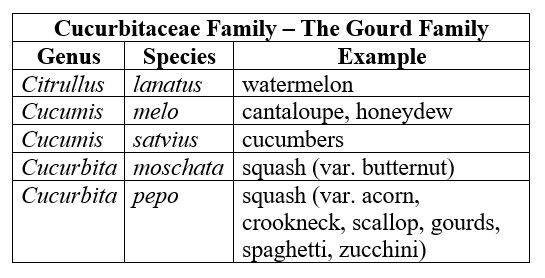
I see this ALL the time, it has actually started to irritate me. Plants can only cross if they’re in the same species. The only thing squash has in common with watermelon is that it is in the same family. Watermelon and squash are distant cousins, they’re unable to pollinate each other.
Myth #3: “Cucumbers will cross with squash”
Like myth #2, cucumbers are in the same family as squash, but they are in different genus and species.
Rules to Remember:
- Cross pollination can only occur between plants in the same species.
- Cross pollination effects the seeds of the fruit. Typically, a cross will only be seen if seeds are saved.
Exceptions to Rule #2: Corn.
Since we eat the seeds of corn a cross will be noticed in the first year. If you plant blue corn next to yellow sweet corn, you will end up with blue and yellow kernels.
References: Seed to Seed by Susanne Ashworth
If you want to see more of my gardens, follow me on Instagram here
 Eager Gardener