Thick Question:
How can we as educators teach students about where their food comes from, when we live in a world where what we eat comes all over the world?
According to Center for Urban Education about Sustainable Agriculture (CUESA), “It is estimated that the meals in the United States travel about 1,500 miles to get from farm to plate”.
How far food travels isn’t something that the average American thinks about. In the U.S. when we need food we will most likely go to the grocery store. There is a severe disconnect between the people who grow food and the average person in the U.S..
This topic is meant to bridge that gap.
What is the project?
I will be creating a map of the foods that were found at my neighborhood supermarkets. I will be noting where they came from and how far they traveled.
Then I will be discussing ways you can incorporate food education into your own classroom.
Why is it important to teach about where our food comes from?
We live in an era where we are globally connected in different ways. We can travel from various countries fairly easily. 100 years ago if we wanted to go to Europe we would have to travel by boat. Now we can hop on a plane and be there by the next day. Food from all over the world can now travel long distances to reach our plates. We can eat bananas year round, even though bananas can’t grow naturally in Indiana.
As a human race we are all connected through food. We all need it. Scientists and politicians are constantly trying to find new ways to feed the Earth’s growing population. We’ve been given a luxury of eating tropical foods all year round, but what if that’s the problem? What if the solution is simply diversifying the foods that we can grow in our own countries?
As educators it is our job to foster the young minds of tomorrow’s world leaders. We need to give them the opportunities to question the status quo. They need opportunities to problem solve given real life circumstances.
Why am I passionate about this project?
As a gardener, I love the environment. It’s important to know how far our food is traveling to get to us. Eating more food locally grown, reduces our carbon foot print and is more sustainable. When we educate people about the effects of our food choices, the more informed decisions they will make when it comes to buying food from the supermarket versus supporting the local organic farmer/grower.
Data Analysis: How far did my food travel?
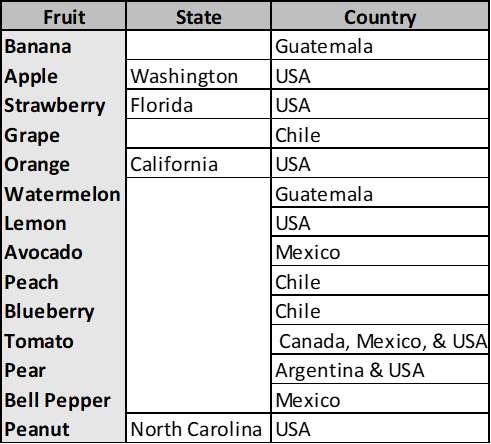
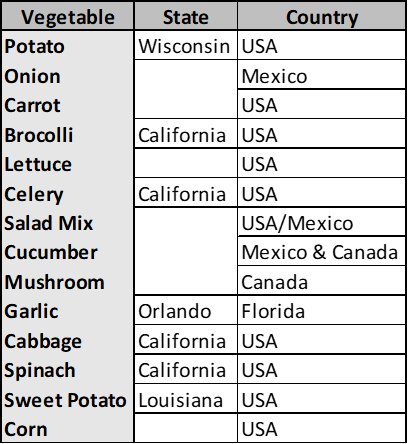
I have created a map of the popular fruits and vegetables in the U.S.. I went to Meijer and noted where each item was grown or packaged.
Not all of the produce gave which state it was grown in. I have created a map based on the states and cities the produced stated where it was grown or packaged in.
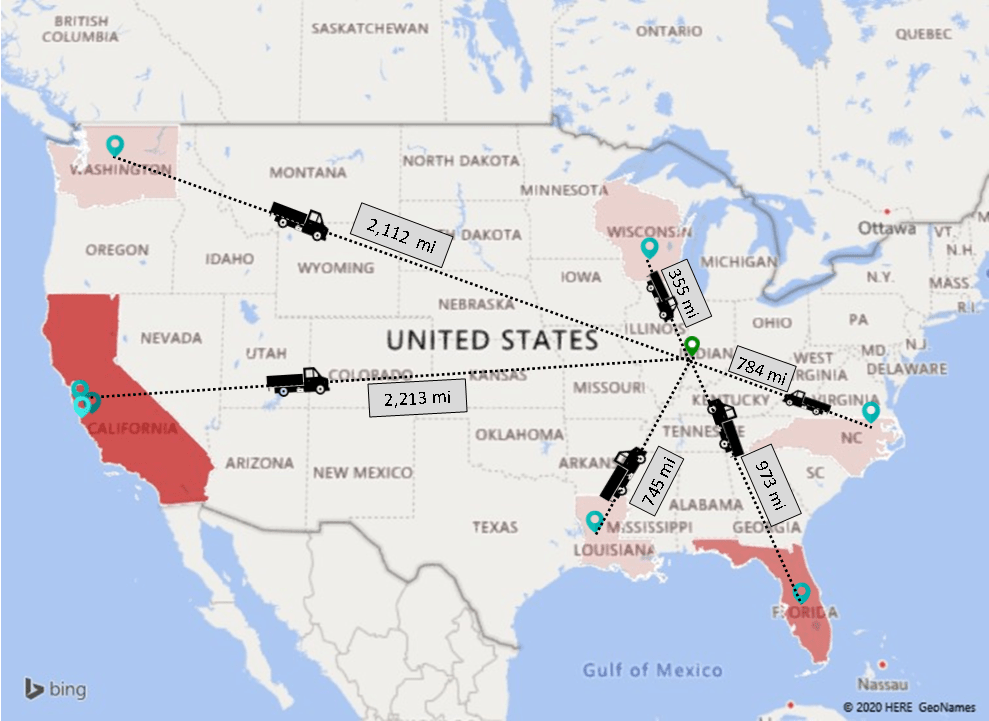
I also created a map of the countries where our foods came from.
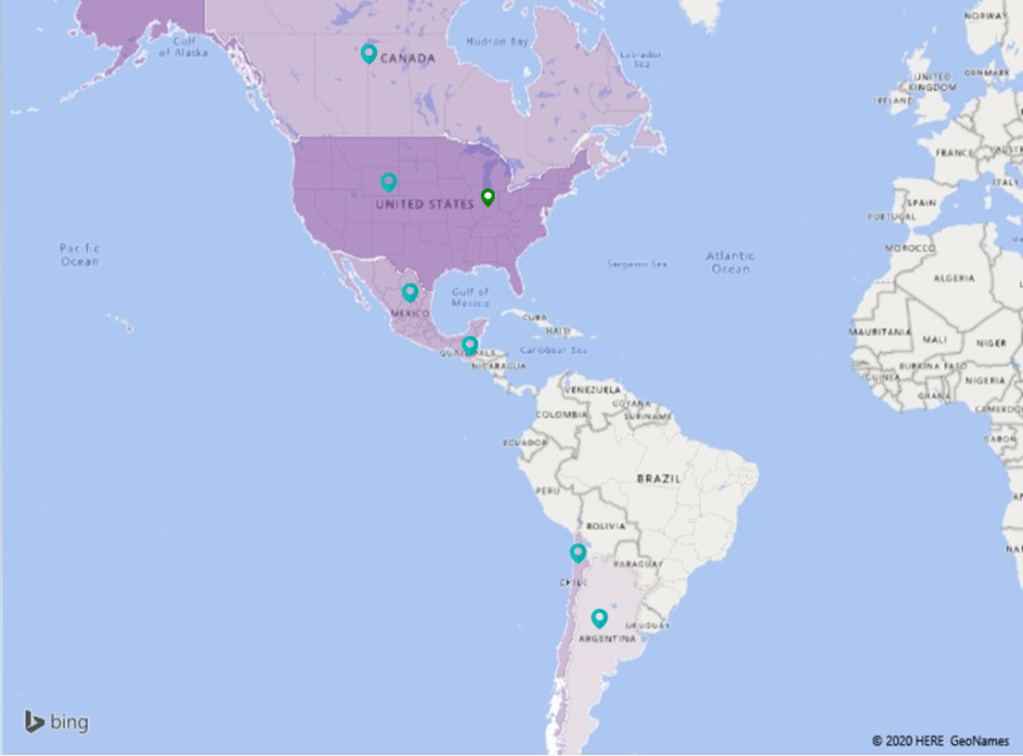
*The locations will vary depending what season you are in and where you are located. I gathered my data on March 17, 2020.
Here are the PDF downloads for the maps
Here is a list of the fruits and vegetables I researched.
Fruits
- Bananas
- Apples
- Strawberries
- Grapes
- Oranges
- Watermelon
- Lemons
- Avocados
- Peaches
- Blueberries
- Tomatoes
- Pears
- Bell Peppers
- Peanuts
Vegetables
- Potatoes
- Onions
- Carrots
- Broccoli
- Lettuce
- Celery
- Salad Mix
- Cucumbers
- Mushrooms
- Garlic
- Cabbage
- Spinach
- Sweet Potatoes
- Corn
*I have used the botanical classifications of fruits and vegetables for this project.
Of the 28 produce items I examined:
- 17 of the 28 foods were grown in the USA.
- Our foods came from 6 different countries: USA, Canada, Mexico, Guatemala, Chile, and Argentina.
- 10 of the 17 United States grown food listed the state it was grown in. Of those 10, 5 of the foods were grown in California.
Teaching Students about Food:
How can you incorporate this topic into your reading lesson?
Before going into detail about how far fruits and vegetables travel to get to our plates. Make sure the students understand that fruits and vegetables come from plants, possibly discuss what makes something a “fruit” and something a “vegetable”. Make sure you follow botanical classifications, not culinary classifications. They are different. Botanically, tomatoes and peppers are fruits, because they form from the flowers of the plants. Vegetables are leaves, stems, and roots of plants. You may just blow the students minds by telling them that tomatoes and peppers are actually fruits, not vegetables.
Activity: Where did my food come from? Reading and Geography
Materials:
- Map of the World
- Fruits
- Vegetables
- Pin point marker (sticker or pin)
Buy enough fruits and vegetables so that there is enough for each student in your class. Then go over how the students can find out where there fruit or vegetable was grown. Discuss how the stickers on the produce says the country it is from.
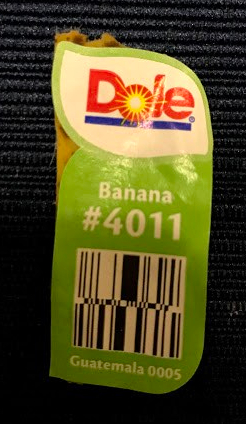
The image above is an example of a banana sticker. It tells the reader that it was grown in Guatemala.
After each student has found out where their food has come from give the students a sticker or some type of marker to mark on the map where their food came from. Give the students enough time to find their country/state on the map.
After every student has marked their item on the map, review and discuss what they learned. Talk about which item traveled the most and which traveled the least.
General Food Topics to Discuss with Children
Students, especially students who grow up in urban areas, may not be aware of where/how their food grows. Milk comes from cows, but there’s other kinds as well, such as: goat, almond, and soy. What are these things and what do they look like?
Because the food we eat is so diverse, it is important to talk about animals that produce several common food items, like cows. We get so much food from them. Read a book about cows that is appropriate for your grade level. After reading the book, make sure to discuss appropriate living conditions for cows and products that come from cows.
You can easily create a chart with products that come from cows: milk, cheese, beef, hamburgers, etc. You can also compare and contrast this with other animals/types of food.
Often times teachers talk about people as omnivores and herbivores. Teachers should expand that and also teach the terms vegan and vegetarian as well.
There are a wide variety of topics based around food that you can incorporate into your lessons. Like how does food grow, where does it grow/live, and what foods come from plants and which come from animals.
I recommend reading the book How Do Apples Grow by Betsy Maestro it is about how fruits like apples grow. This would be a great introductory book to read when discussing how plants grow.
Teaching students where their food comes from and how far it travels is important in creating educated well rounded citizens. How can we teach students to love nature, if they’re unaware of the how much it provides for them?
 Eager Gardener